
On Friday, July 7, 1905, the Globe Gossip column of the Fall River Globe carried a single wedding notice for a June 28th event. In a city filled with mill workers, immigrants, and factory whistles, one marriage was deemed worthy of prominent placement. It conveyed more than the date and location of a ceremony—it revealed aspirations, family dynamics, fashion, and social customs in the summer of 1905.
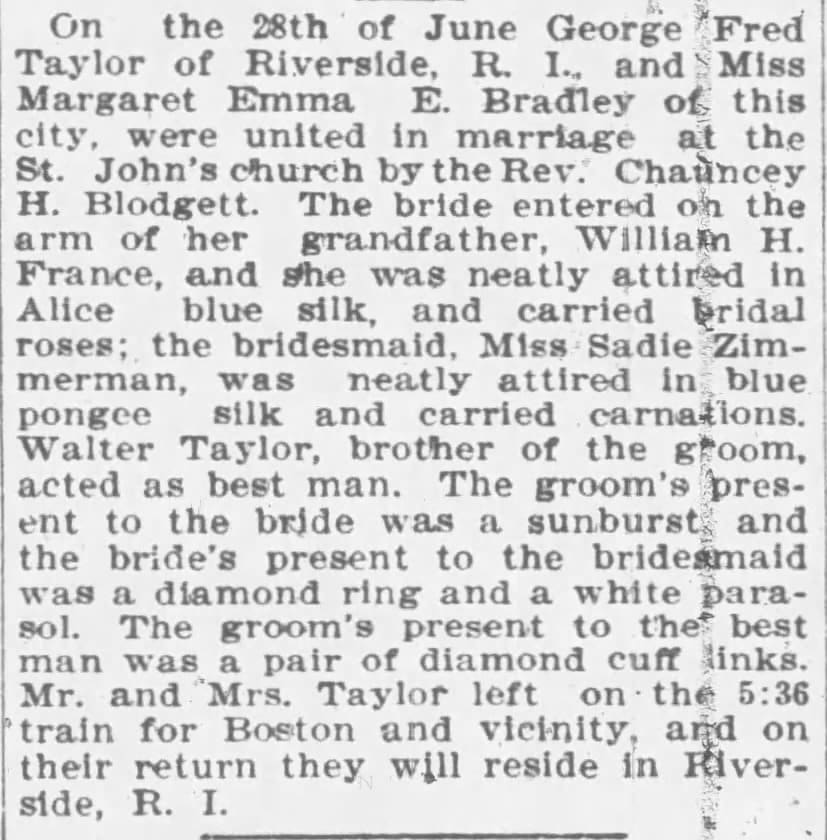
Family history storytelling depends on facts found in documents and clues hidden in plain sight. In this case, a wedding notice for George Frederick “George Fred” Taylor and Margaret Emma Bradley described not only their ceremony at St. John’s Church in Fall River, Massachusetts, but also their gowns and their gifts. Those details provide rare social context.
George Frederick Taylor was thirty-one, the son of James W. Taylor and Jennie E. Sanderson. His bride, twenty-four-year-old Margaret Emma Bradley, was the daughter of John Bradley and Eliza A. France. Both bride and groom worked in factories—he as a secondhand in a shoelace factory, she as a weaver in a textile mill. In 1905, Fall River was one of the largest textile centers in the United States. Ten-hour workdays were common, and weddings were often scheduled around brief mill shutdowns. A midweek ceremony in late June may not have been romantic whimsy, but practical timing.
The notice raises intriguing questions. Neither the bride’s or groom’s parents were mentioned. James W. Taylor died in 1892, and it’s possible John Bradley was deceased as well. Instead, Margaret’s maternal grandfather, William France—an English immigrant—escorted her. Census records from 1900 indicate that Margaret was living in Fall River with her remarried mother and her grandfather. His presence at the altar suggests both affection and circumstance. Within a year of the wedding, he would be gone.
The ceremony was performed by the Reverend Chauncey H. Blodgett at St. John’s Episcopal Church. Their choice of parish reflects both religious affiliation and the growing stability of Episcopal congregations in industrial New England communities. The Amon Carter Museum of American Art has a platinum print photograph of him. Reverend Blodgett became rector in 1901.
Wedding Fashions
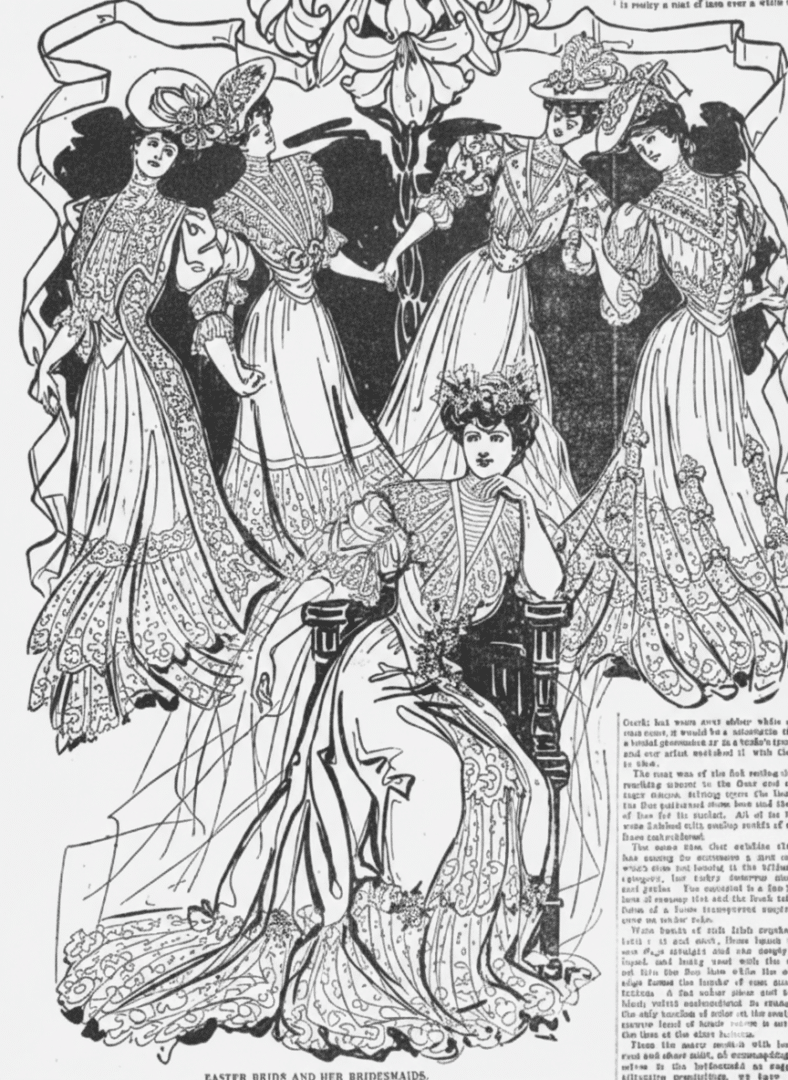
The fashion details anchor the story firmly in the Edwardian era. In the summer of 1905, the United States was midway through Theodore Roosevelt’s presidency. His daughter, Alice Roosevelt, had made “Alice blue” a fashionable pale silvery blue shade nationwide. Margaret wore a gown of Alice blue silk and carried bridal roses. Silk—though costly—was a popular choice for summer weddings, even among working families who saved carefully for the occasion. Dresses featured lace trim, narrow waists, and the fashionable “pigeon-breast” silhouette created by structured corsetry.
Her bridesmaid, Sadie Zimmerman, wore blue pongee silk and carried carnations. Pongee was soft and slightly textured, an elegant but practical choice. Brown’s Store on North Main Street advertised yard-wide pongee silk for one dollar—a reminder that style was attainable, if carefully budgeted.
Gifts
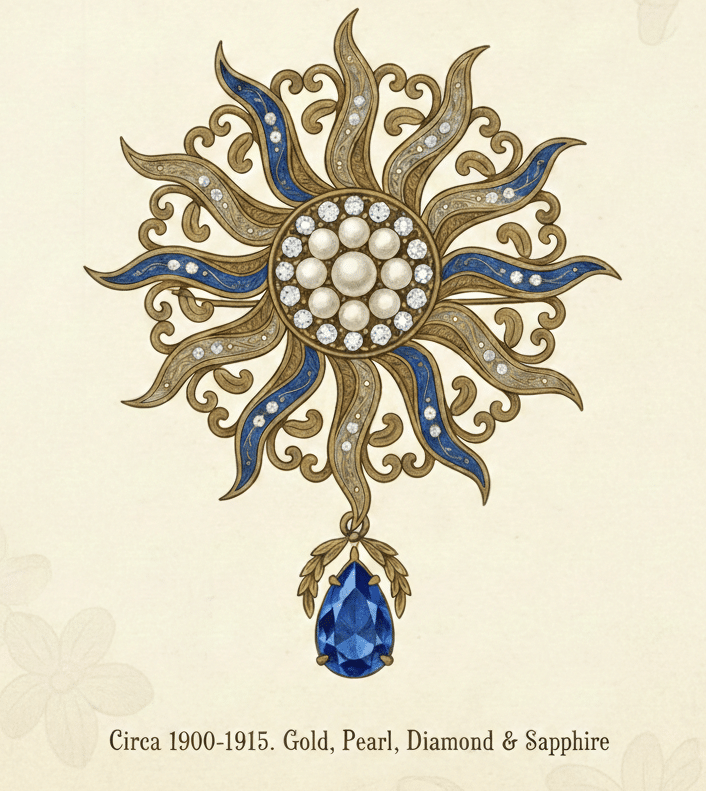
The gifts exchanged suggest dreams and generosity. George gave Margaret a sunburst ornament—likely a brooch, a popular Edwardian design with radiating arms set with stones. The best man, George’s brother Walter, received diamond cufflinks. Sadie received a white parasol and a diamond ring. In an era before sunscreen and widespread leisure tanning, a parasol was both fashionable and a practical means of protecting the complexion, signaling refinement.
Settling In
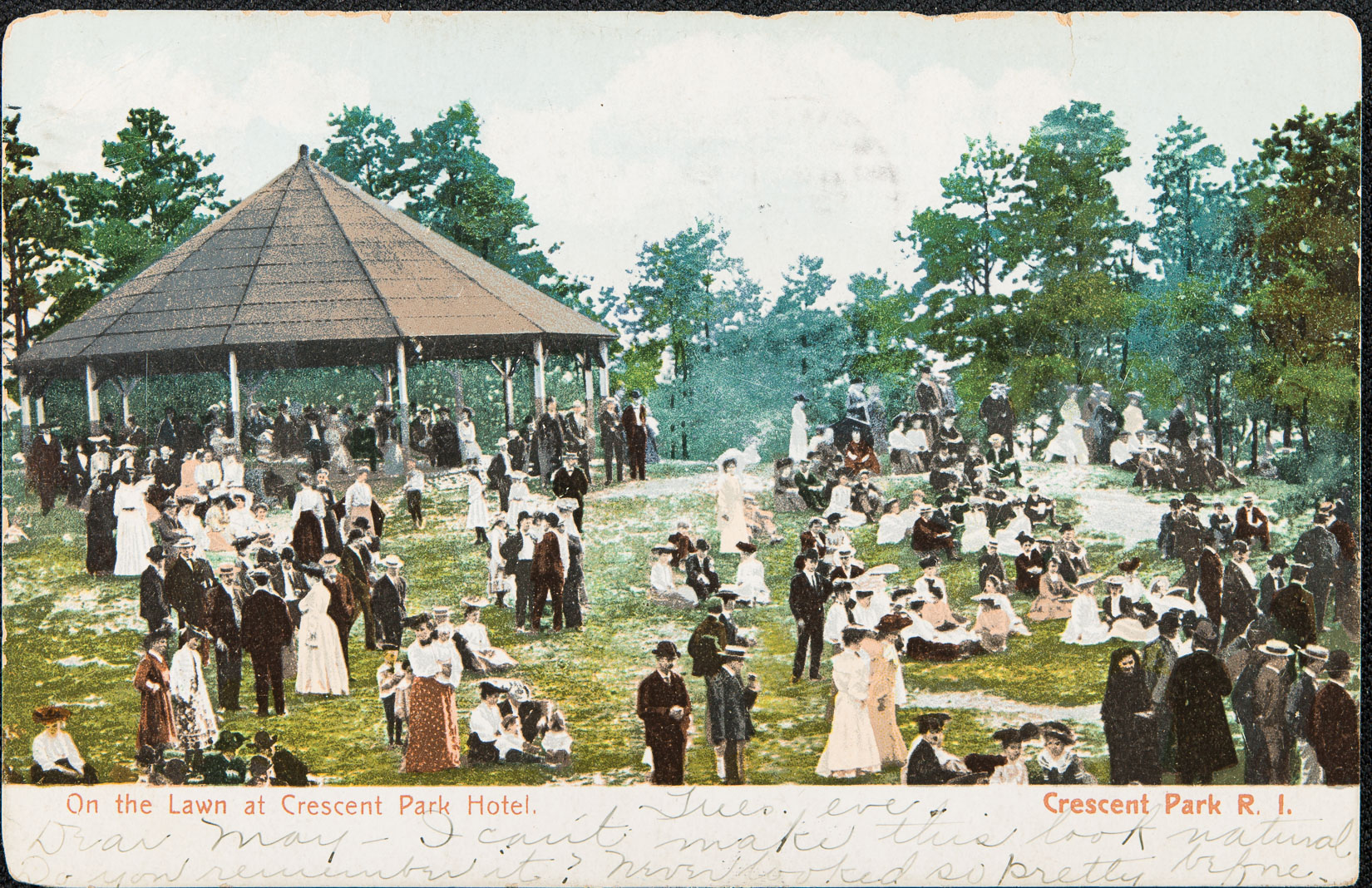
After a wedding trip to Boston—probably via the Old Colony Railroad—the couple settled in Riverside, a neighborhood in East Providence, Rhode Island. Riverside’s coastal location made it an ideal late-nineteenth- and early-twentieth-century tourist destination. The Crescent Park Amusement Park was a short trip from nearby cities. By 1910, George and Margaret were renting a home next door to George’s widowed mother and his unmarried brother. The proximity suggests close family ties and economic interdependence typical of the period.
Yet the optimism of June 1905 did not guarantee a secure future. Their first daughter, Grace, died of pneumonia in January 1907 at just four months old. Childhood mortality remained heartbreakingly common before antibiotics. In October 1914, George died in East Providence of leukemia, leaving Margaret widowed before age thirty-five. By 1920, their surviving daughters were living in Fall River with their grandmother and step-grandfather.
The Alice blue silk, the diamond gifts, the Boston honeymoon—these details speak of hope. The census records and death certificates reveal the fragility beneath it. Together, they remind us that family history is not only a record of events, but a reconstruction of lived experience.
A single wedding notice in the summer of 1905 becomes more than an announcement. It becomes a window into expectations, labor, fashion, faith, and loss—woven together like the fabric Margaret once tended in the mill.