
Look at this photograph quickly, and you might assume it dates to the Civil War. It doesn’t. Dating an image often relies on a combination of clues-the who, what, when, and where-but occasionally a single piece of evidence is enough to establish a reliable timeframe. This photograph of a man in uniform is one such case in which the photographer’s imprint provides the critical clue.
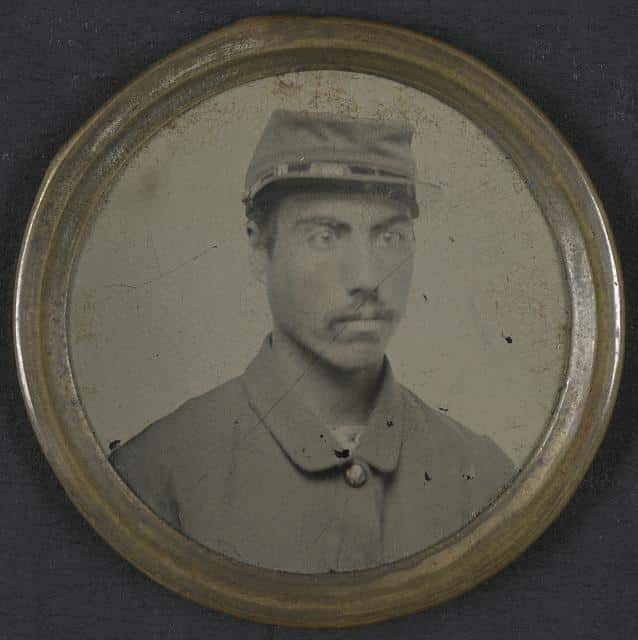
. , None. [Between 1877 and 1880] Photograph. https://www.loc.gov/item/2011661489/.
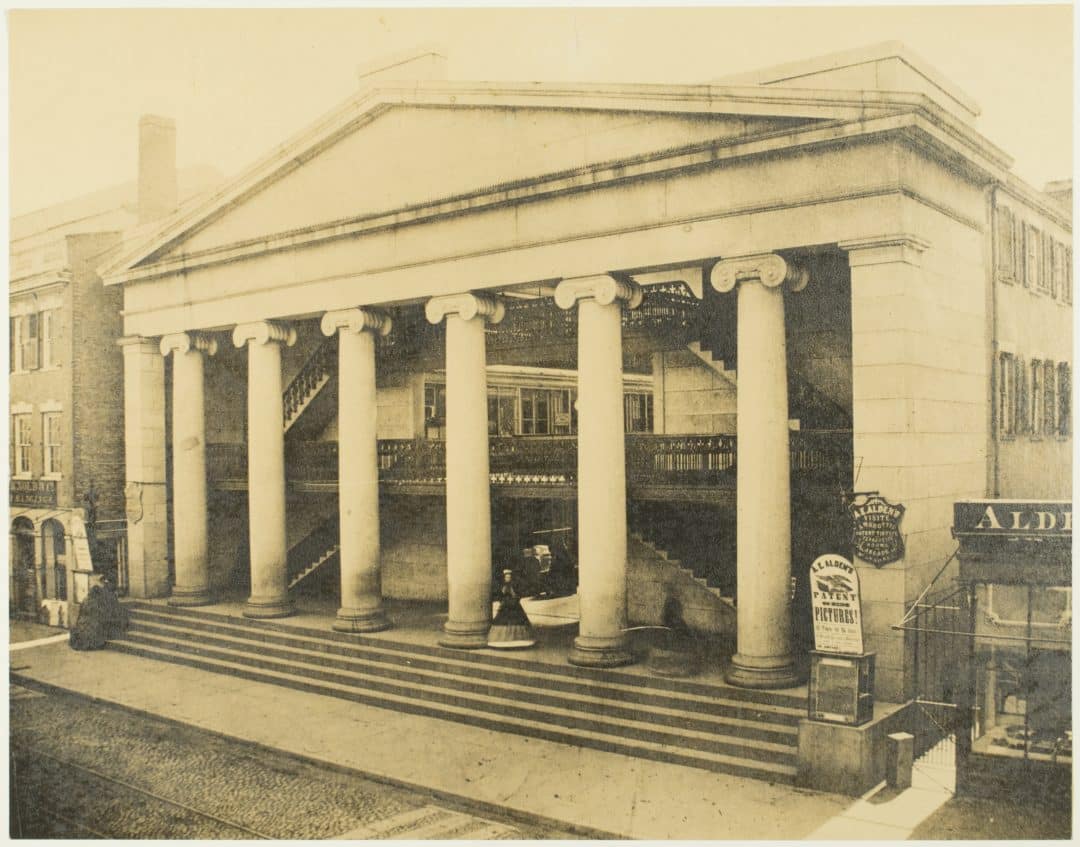
The reverse of the image lists the photographer’s name, address, and image type. It was the name “Alden” that immediately caught my attention-not because he was a relative, but because I was already familiar with his Providence, Rhode Island studio in the Arcade, one of the nation’s earliest indoor shopping centers.
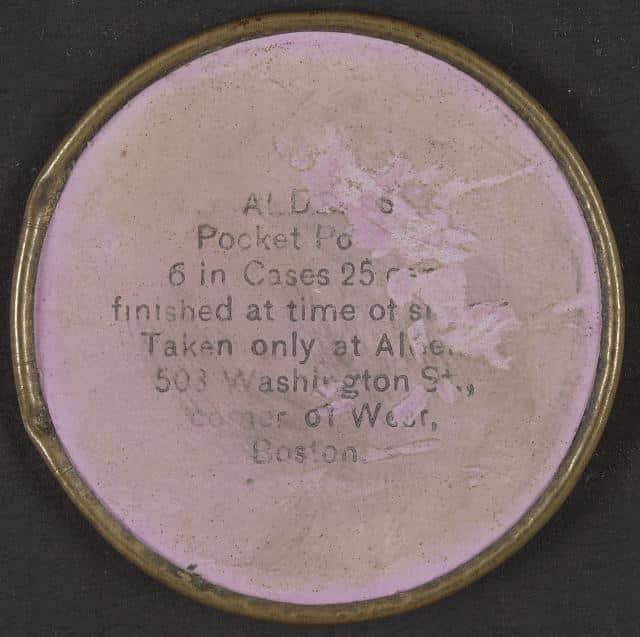
“Alden’s Pocket Portraits, 6 in Cases 25 cents, finished at time of sitting. Taken only at Alden’s 503 Washington St., corner of West, Boston.”
Augustus Ephraim Alden (1837–1914), who advertised as A. E. Alden or simply Alden, began his photographic career in western Massachusetts, working in the Northampton and Chicopee areas. During the Civil War, he produced portraits of soldiers and later capitalized on the booming market for celebrity images, including photographs of Abraham Lincoln, Mary Lincoln, and members of the president’s cabinet.
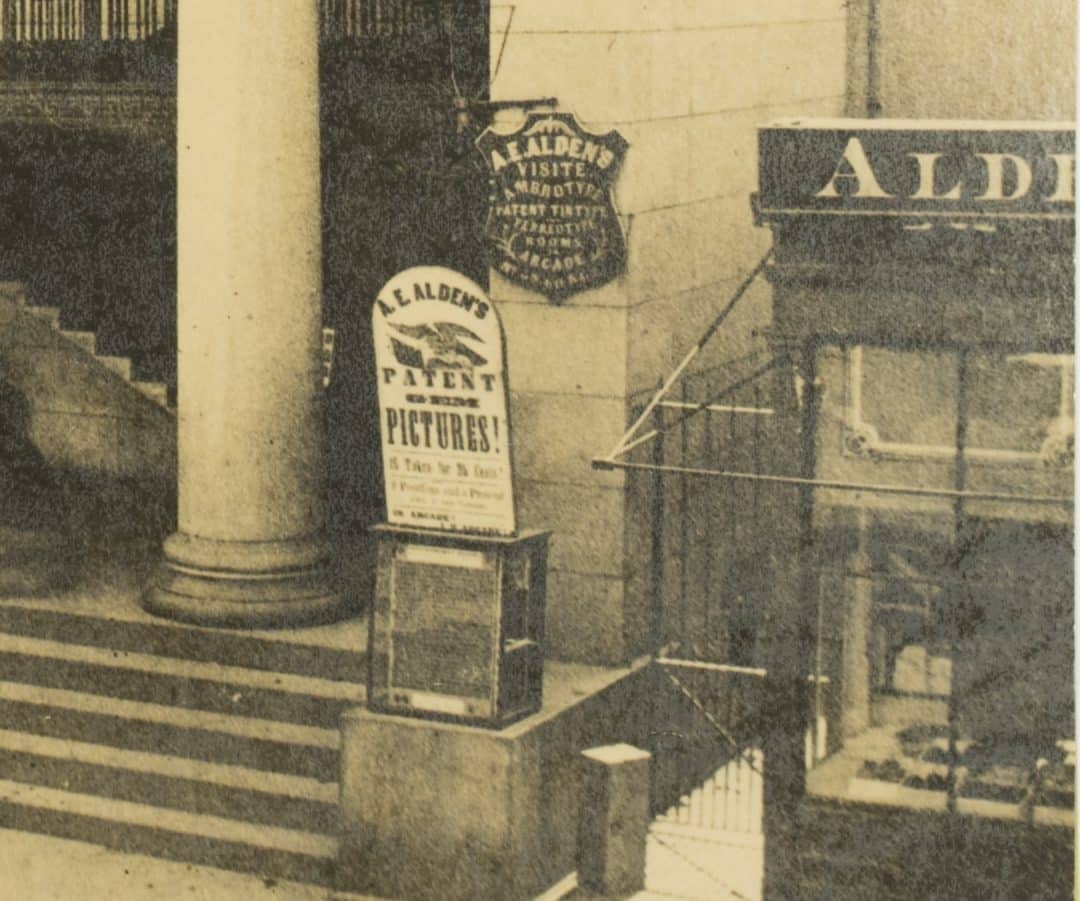
By the mid-1860s, Alden relocated to Providence, maintaining a studio on the third floor of the Arcade and advertising prominently on the building’s front stairs. Like many photographers of the period, he adapted his business to changing consumer tastes. After the war, Americans continued to collect photographs—not only of family members, but also of notable public figures.
Seeking greater opportunity, Alden moved to Boston in the 1870s. According to A Directory of Massachusetts Photographers 1839–1900 by Chris Steele and Ronald Polito (Picton Press, 1993), he operated studios at several addresses, including 503 Washington Street from 1877 to about 1880. The unidentified image of the man in uniform dates to that three-year period.
This narrow date range is key. The unidentified portrait of the man in uniform can be confidently dated to this three-year period. It coincides with Alden’s role as Eastern Agent for Applegate’s Pocket Portrait Machines in 1877, a technology that allowed photographers to produce multiple mechanically finished images quickly and inexpensively—often selling for as little as 6 for 25 cents. The photograph’s format and commercial context align more closely with the later period than with the Civil War era.
This example underscores that examining a single clue (the uniform) is insufficient. A photographer’s work history can add context for the image. If this was in a family collection, the clues of location and military service might be enough to give him a name.