
In honor of International Women’s Day, I want to celebrate a woman who never appeared in headlines and never sought attention—my Nana, my paternal grandmother. She lived what many might call an ordinary life. Yet to me, it was anything but ordinary. She is the only grandparent I truly remember. By the time I was born, both of my grandfathers were gone, and my maternal grandmother died when I was just a year old. Nana was my living link to the past.
Memory preserves her in small, vivid details. She called the living room the parlor, a word that felt like it belonged to another century. Every Sunday, the smell of pot roast filled the house. Her clam chowder was a family staple. She colored patiently, always in small, careful circles. A bright green parakeet named Birdie chirped in the background of her apartment. On summer days, we’d make lemonade together, rolling the lemons and oranges to squeeze the juice.
For seven years, my family lived downstairs from her in a three-tenement house my father owned. Her oldest daughter lived with her; sometimes her youngest son did too. She walked slowly in sturdy boots and wore her long hair pulled back in a hairnet well into her seventies. At Christmastime, she could look out her window and see the Tower in Jenks Park in Central Falls, Rhode Island—a landmark that anchored her to place and tradition.
But woven through those steady domestic rhythms was something quieter. She missed her family. She rarely spoke about her parents or her early life. My mother once remarked that Nana did not like her own mother. That silence should have told me something.
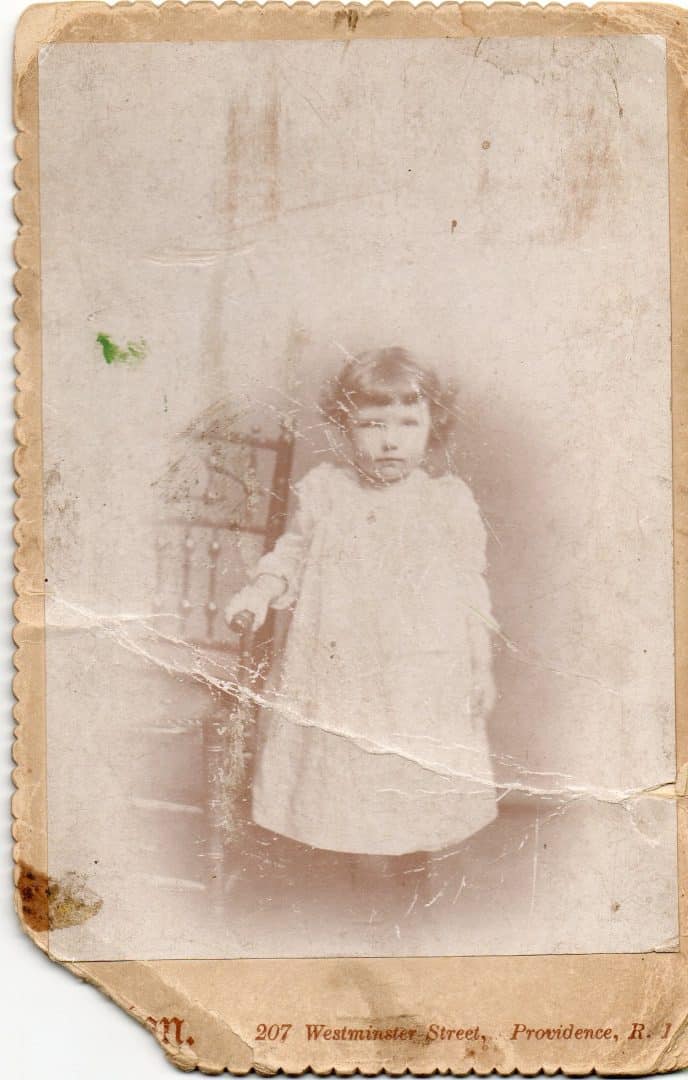
When I began looking for answers, the census offered clues. On the 1910 U.S. census for Pawtucket’s Fourth Ward, her mother, Sarah Jane Kelley, reported that she had given birth to nine children, but only five were still living. One of the children lost was from her mother’s disastrous, only days-long first marriage. Nana—born Eliza—entered the world in December of 1892. Earlier that same year, in February, her older brother James had died. For six years afterward, she was the only surviving child in the household. Suddenly, that childhood studio portrait takes on new meaning. There are no photographs of her siblings as young children, but why was she taken to a photographer, requiring a trip by public transportation? Perhaps she represented both hope and fragile survival in a family acquainted with loss.
The 1910 census also reveals her nickname—Liza—and that at seventeen she worked as a mill hand in a tag shop. The household was crowded: several of her mother’s siblings lived with them, four in addition to a cousin, making twelve people under one roof. That same year brought another blow. In December 1910, her father, Harry Wilson, died, leaving Sarah with four children under the age of twelve. Loss, responsibility, and crowded living conditions were part of Nana’s early landscape long before she became the woman I knew.
There was another tragedy she carried quietly. While babysitting her first grandson, he died of whooping cough. Grief visited her more than once.
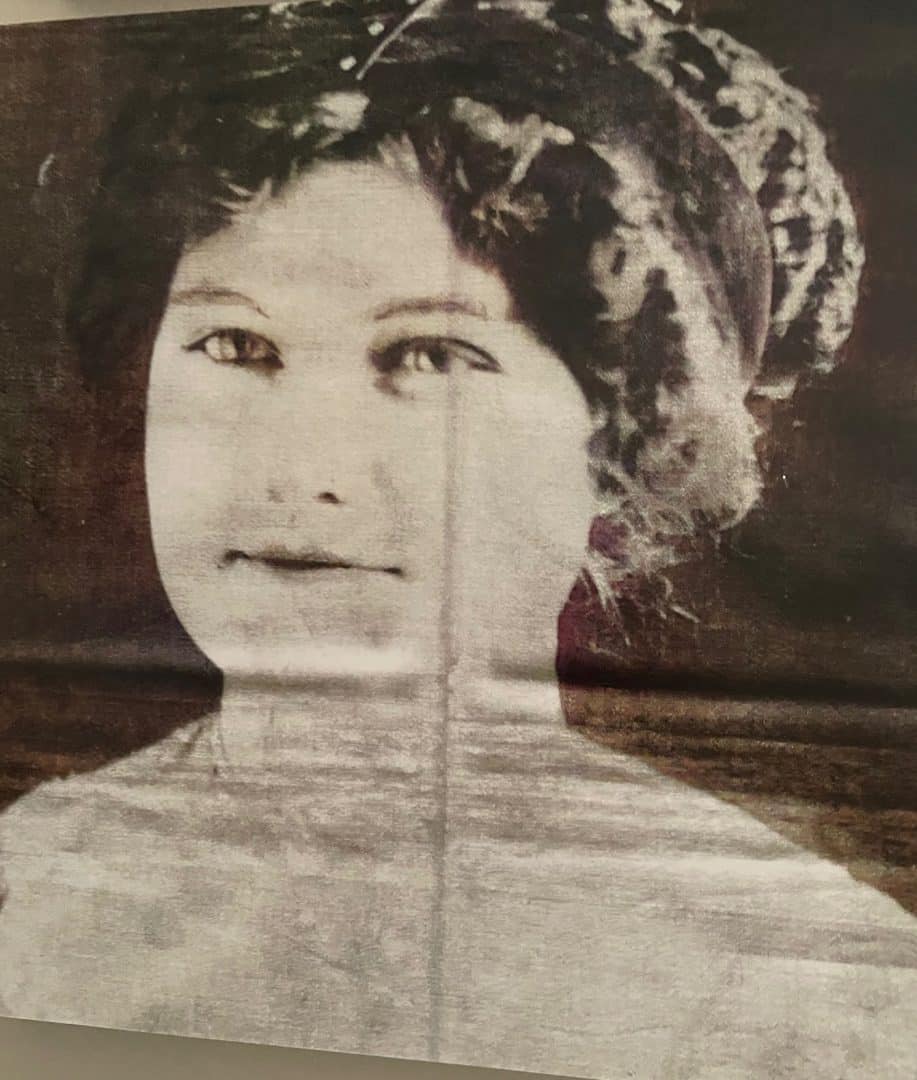
A later photograph of her, printed on silk (shown above), shows a poised young woman. My father always said it was her wedding portrait. Not every early twentieth-century bride wore white; many married in their best dress, as she appears to have done. On September 30, 1912, she married James William Taylor at St. Paul’s Church in Pawtucket, Rhode Island. Together, they would have six children and build the family that eventually included me.
As a genealogist, I have learned that what isn’t said can be as powerful as what is recorded. Nana did not talk about her parents. She did not share stories of crowded rooms or early bereavement. Instead, she offered pot roast on Sundays, careful coloring in small circles, and the steady reassurance of presence.
Her life was not famous. It was not headline-making. But it was marked by resilience, quiet endurance, and the ability to keep going after loss. On this International Women’s Day, I honor women like my Nana—women whose strength was not loud, but lasting.