
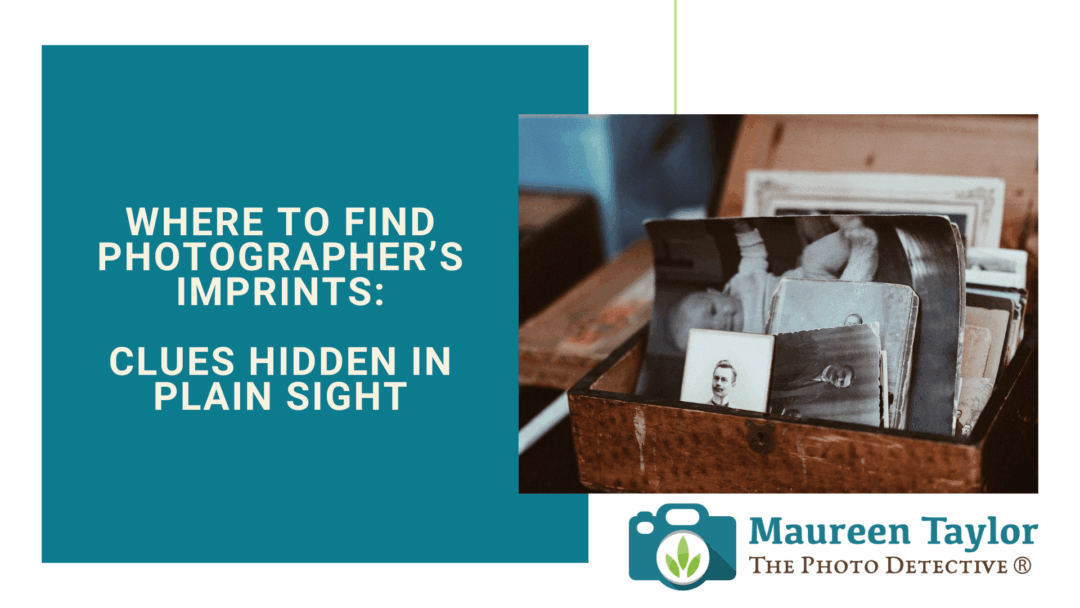
Have you ever wondered who took that old family photograph? Photographer’s imprints—the logos, names, or studio marks found on historic images—are essential clues for dating and locating photos. Knowing where to look and what to look for can unlock an entire layer of your family history.
Where to Find Them
Photographer imprints appear in more places than you might expect. Here are the key spots to check:
- Marks on the Mats
For cased images such as daguerreotypes, ambrotypes, and tintypes, photographers sometimes engraved or embossed their names on the mats or cases. Examine carefully under good light, but never disassemble these cases—they’re fragile and valuable as complete artifacts. - Front or Back of the Image
Cabinet cards and cartes-de-visite often display the photographer’s name and studio address printed or embossed on the front. Turn the photo over, too: the back is often beautifully decorated with advertising text, design flourishes, and award medals that can help you date the image. - Plate Marks
Some photographers etched or stamped identifying marks on the plate itself. For tintypes and glass plate negatives, these can appear along the edge. However, do not attempt to take apart or clean these images to find a name—leave that to a professional conservator. - Business Cards and Enclosures
Photographers sometimes slipped a business card or branded enclosure into the photo package. If your collection includes envelopes, folders, or mounts, check for printed or embossed information. These details can provide the studio’s name, street address, and even a slogan or awards listing.
Why Photographer Imprints Matter
Photographer imprints aren’t just decorative—they’re historical evidence. By identifying the photographer or studio, you can often:
- Narrow down the timeframe when the photo was taken
- Pinpoint the location of your ancestors during that era
- Learn about the evolution of photo technology and styles
Studios often changed names, moved locations, or rebranded as photography evolved. For example, a business that began producing daguerreotypes in the 1850s might have transitioned to cartes-de-visite by the 1860s or cabinet cards by the 1870s. Tracking those name and technology changes can help you determine not only when the photo was taken, but why it was made in a particular format.
The Evolution of Photo Studio Names and Technology
In the early days, photographers often called themselves “daguerreotypists” to emphasize their skill with the new process. As technology advanced, those titles evolved:
- Daguerreotypist (1840s–1850s)
- Photographic Artist or Ambrotypist (1850s–1860s)
- Photographer or Portrait Artist (1870s onward)
These shifts weren’t just semantic—they reflected real technological transitions. New materials, improved chemistry, and the rise of studio photography meant new marketing approaches. When you see the word daguerreotypist or artist on a photo, it signals a different era than one labeled photographer or studio.
Detective Work for the Modern Researcher
Combining photographer imprints with city directories, census data, and newspaper ads can pinpoint when a studio operated at a certain address. Pairing those details with changes in photographic formats helps date your images even more precisely.
Remember: every mark tells a story—not only about your ancestors, but about the craft and commerce of photography itself.
Try using Perplexity.ai for researching the photographer then follow those sources to discover more about when a studio was in business and their offerings.
Next Step: Try examining your own photo collection for photographer names and imprints. Document each discovery in your metadata fields, including location, studio name, and format. These details will strengthen your photo’s provenance and enrich your family story.