
If you’ve ever been told, “If there’s a nun in your family, figure out her order,” you’re not alone—and you’re probably also wondering how on earth to do that.
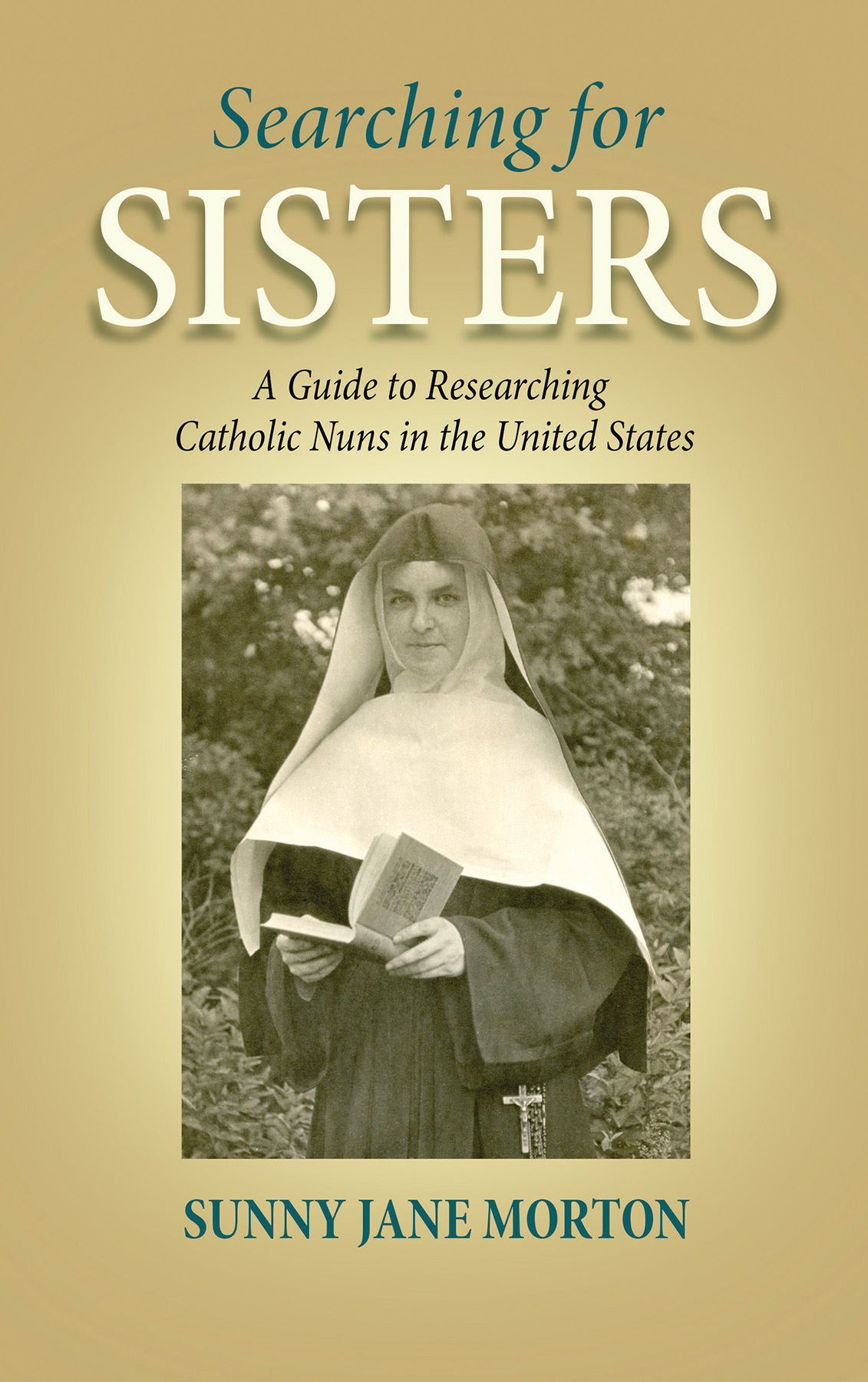
In a recent episode of The Photo Detective Podcast, I sat down with Sunny Morton to talk about her groundbreaking book, Searching for Sisters: A Guide to Researching Catholic Nuns in the United States. What started as a simple conversation turned into a deep dive into one of the most overlooked groups in family history: women who entered religious life.
The Mystery of the “Disappearing Woman”
As genealogists, we’ve all seen it.
A woman appears in childhood records—census entries, maybe a baptism—and then… she vanishes.
No marriage. No death record (at least not where you expect it). No trace.
One possibility? She became a nun.
As Sunny pointed out, these women often “disappear” from traditional family records because they step into an entirely different system—one with its own names, rules, and archives.
And unless you know where to look, they can remain hidden for generations.
My Own Surprise Discovery
Here’s the twist—even for me.
I didn’t think I had any nuns in my family.
But when I dug into newly available newspaper records, I found an obituary for my two-times great-grandmother—and there they were. Two daughters listed as “Sister,” each in a different religious order.
Two nuns. Completely unknown to me.
That’s the moment this topic went from interesting to essential.
Why Identifying the Order Matters
You can’t just search for “nun” and expect results.
Religious women belonged to specific communities—orders, congregations, convents—each with its own records. And those records can be incredibly rich:
- Personal files
- Correspondence
- Entrance records
- Sometimes even photographs
But first, you need to identify the order.
That’s where clues come in.
Clues in Records—and Photographs
Sunny shared one of the most important strategies: start with what you already have.
Obituaries are gold mines. They often list religious names and affiliations.
Census and vital records can help you match birth names to religious identities.
Newspapers may report vow ceremonies or community events.
And for those of us who work with images? Photographs can be key.
The clothing—the habit—is not just attire. It’s an identifier.
Archivists who work with these collections can often recognize an order just by looking at a photograph. As Sunny explained, they can look at an image and say, “That’s not one of ours”—or point you in the right direction.
That’s powerful.
The Archives You Didn’t Know Existed
Here’s something many researchers miss: most religious orders have archives.
These are not always open for walk-in research, but they are often accessible by email—and the archivists are remarkably helpful.
They want to connect people with their history.
And when you reach out clearly—explaining who you’re researching and why—you may receive detailed information you won’t find anywhere else.
A Bigger Story: Visibility and Impact
One of the most striking parts of our conversation was realizing just how significant these women were—and how often they’re overlooked.
In the 19th and early 20th centuries, women religious:
- Built hospital systems
- Ran schools across the country
- Provided social services on a massive scale
At one point, they were responsible for a significant portion of healthcare in the United States.
And yet, in many family trees, they’re invisible.
What This Means for Your Research
If you have a “missing” woman in your family tree, consider this possibility.
Look for:
- Mentions of “Sister” in obituaries
- Gaps in records where a woman disappears
- Catholic family connections
- Newspaper references to convents or religious life
And don’t forget to look at your photographs with fresh eyes.
That unidentified woman in a habit? She may be the key to an entirely new branch of your research.
Final Thoughts
This episode reminded me of something I say all the time:
Every photograph—and every person—has a story.
Sometimes, that story just requires a different set of records to uncover.
Sunny Morton’s work gives us a roadmap to find those stories—and bring these remarkable women back into the family narrative where they belong.
About My Guest

Sunny Jane Morton is a genealogy educator whose expertise includes using U.S. religious denominational records for family history. She is author of the new book, Searching for Sisters: A Guide to Researching Catholic Nuns in the United States. She is co-author of How to Find Your Family History in U.S. Church Records, which received a book award from the National Genealogical Society (NGS). She is Editor of NGS Magazine; a Contributing Editor at Family Tree Magazine; and an Associate member of the Archivists for Congregations of Women Religious.
Save on Sunny’s Books
- Save on both of Sunny’s books with coupon code Church26 at Genealogical.com
- Searching for Sisters
- How to Find Your Family History in US Church Records