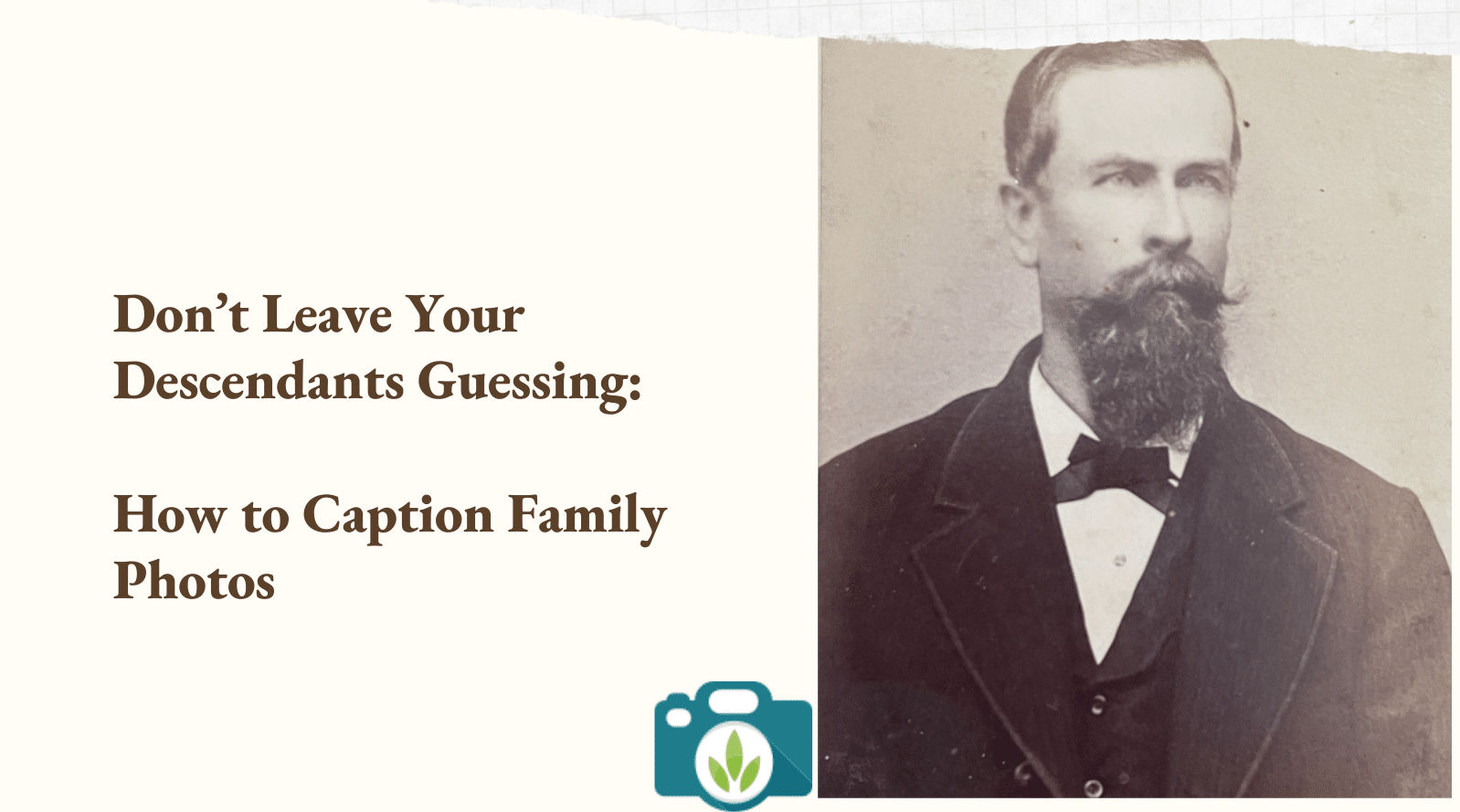
Sometimes captions on the back of photographs leave us wondering what the writer was thinking.
The handwritten note on the back of this card photograph tells us just enough to be frustrating. The writer assumed that anyone reading it would already know the missing details—the name of the family reunion and the identity of the woman celebrating her birthday.
Unfortunately, 147 years later we’re left scratching our heads.
All we know is that on November 1, 1879, a family gathered for a reunion and that “mother” celebrated her 75th birthday that day. The identity of the man pictured in the photograph on the card is also unknown. Without additional clues, it may be impossible to fill in those missing pieces.
Situations like this highlight the importance of properly labeling our photographs.
When you caption a photo, think about who will read that information in the future. A useful label should include as much of the following information as possible:
- Full name of the person or people pictured
- Date the photograph was taken (or an estimated date)
- Occasion or event, if relevant
- Who labeled the photo and when
You may not have all of this information, but even partial details are valuable. A surname or approximate date can be enough for a future researcher to connect the dots.
If you’re labeling original photographs, use the right tools. A soft graphite pencil (8B) works best for paper prints, while a photo-safe Zig® marker is suitable for resin-coated photographs.
Remember—your descendants will rely on the information you leave behind.
The same details you write on the back of a photograph can also become metadata in your photo-organizing software. Recording names, dates, and places digitally makes it easier to group related images into albums and identify connections between photographs.
Context matters. Sometimes, a group of images taken at the same event can solve a photo mystery that a single picture cannot.
I’ve seen it happen many times.