
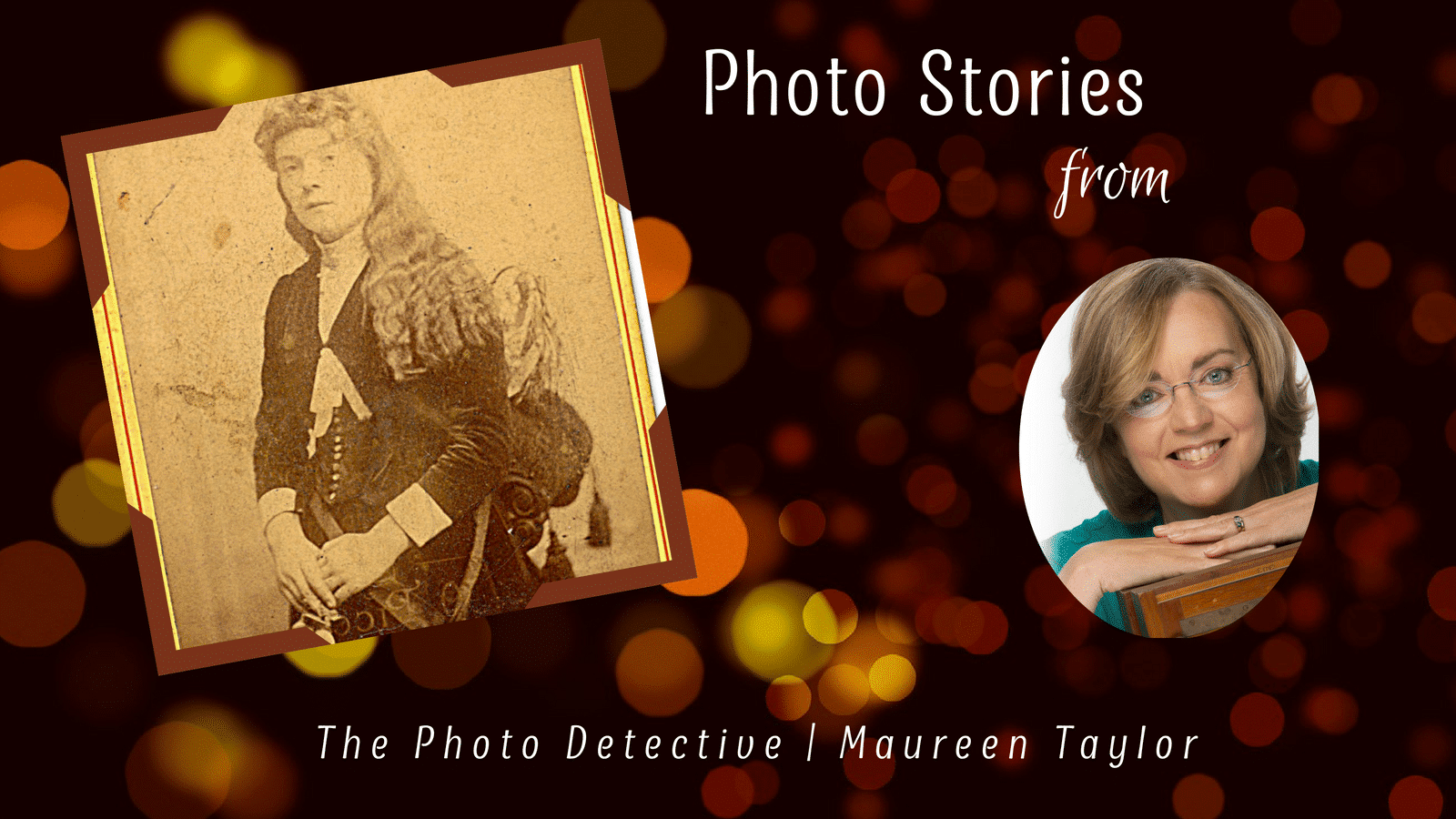
Recently, I featured this picture on my Instagram account. Now I’m wondering about the story behind it. It’s one of more than two hundred images in my collection from overseas.
What Do You See?
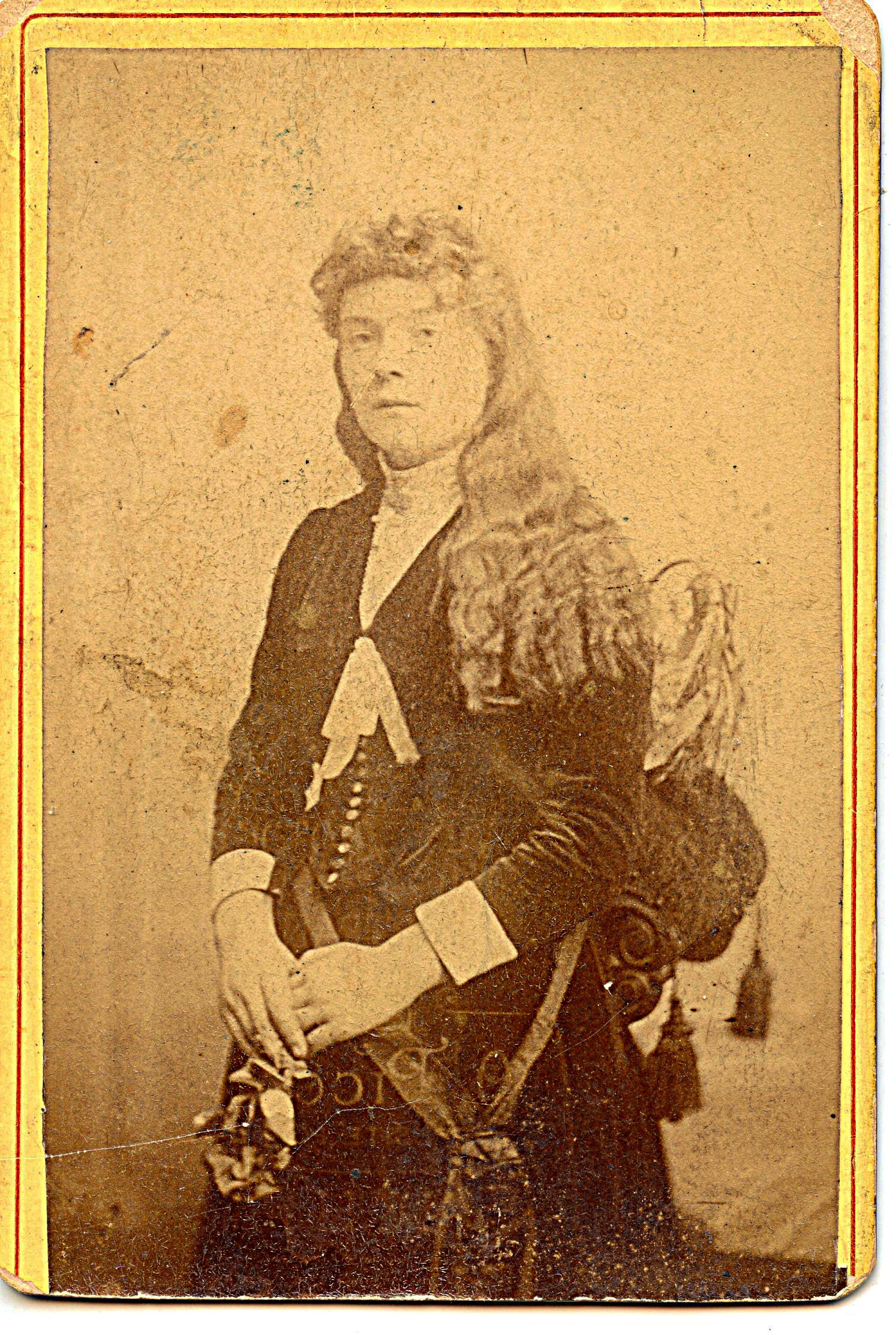
On the surface this looks like a simple studio portrait. A young woman posed for a picture. She’s dressed in an interesting outfit. Her hair is light colored. It could be blonde, light brown or even red. Her short curled bangs suggest a date in the 1880s. But there is so much more going on here. There are props and accessories outside the norm.
A key part of studying pictures is taking a closer look.
A quick glance suggested that the object behind her might be an instrument. It’s easy to make snap judgements about a picture, but it’s really important to take the time to study every piece of it. I enhanced the picture using photo editing software to sharpen the image and improve the contrast. Several things jumped out. There were three details that weren’t really visible before.
Props
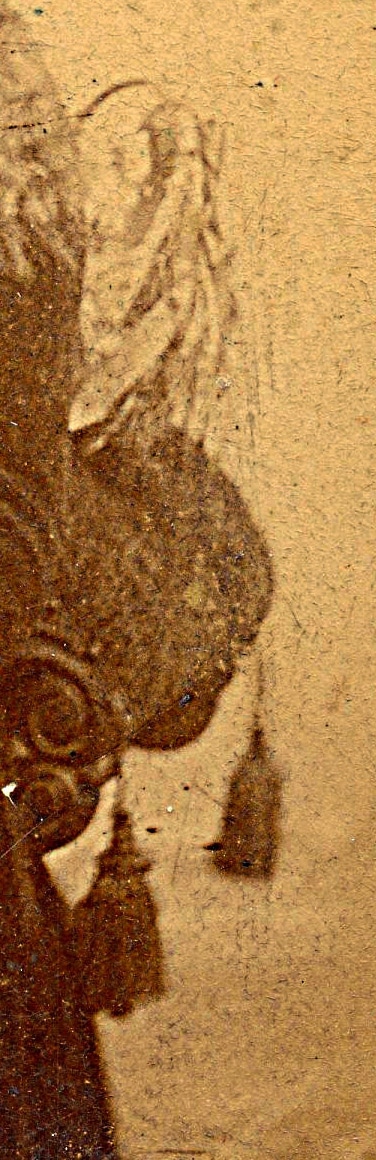
The object behind her isn’t an instrument. It’s a rolled-back couch. The type found in photo studios so that women could stand at them and show off their bustles. In this case, the couch has two tassels. Anyone have an idea about the fringed item on top of the roll? It’s light-colored and has a type of fringe.
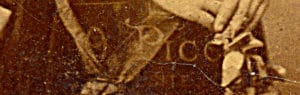
A Modern Looking Detail
It’s a transfer from an image that lay on top of it. This was a real surprise. Of course, the letters are backwards.
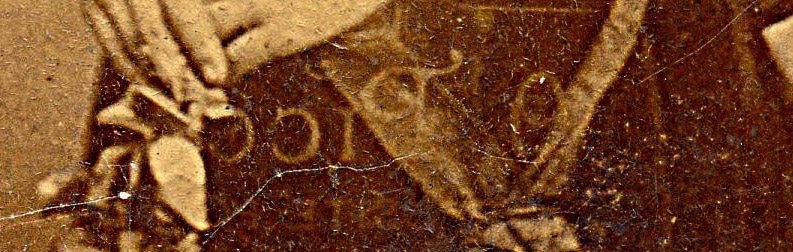
To make reading it easier, I reversed it. Can you read it? PICC I was hoping it said proof, but this is a startling discovery.
Google the Photographer
One of the first things I do when studying a photographer is Google the name looking for other images by the same studio. Sometimes like with this photo, I discover that someone has already done the research. Double checking their details is a lot easier than starting from scratch.
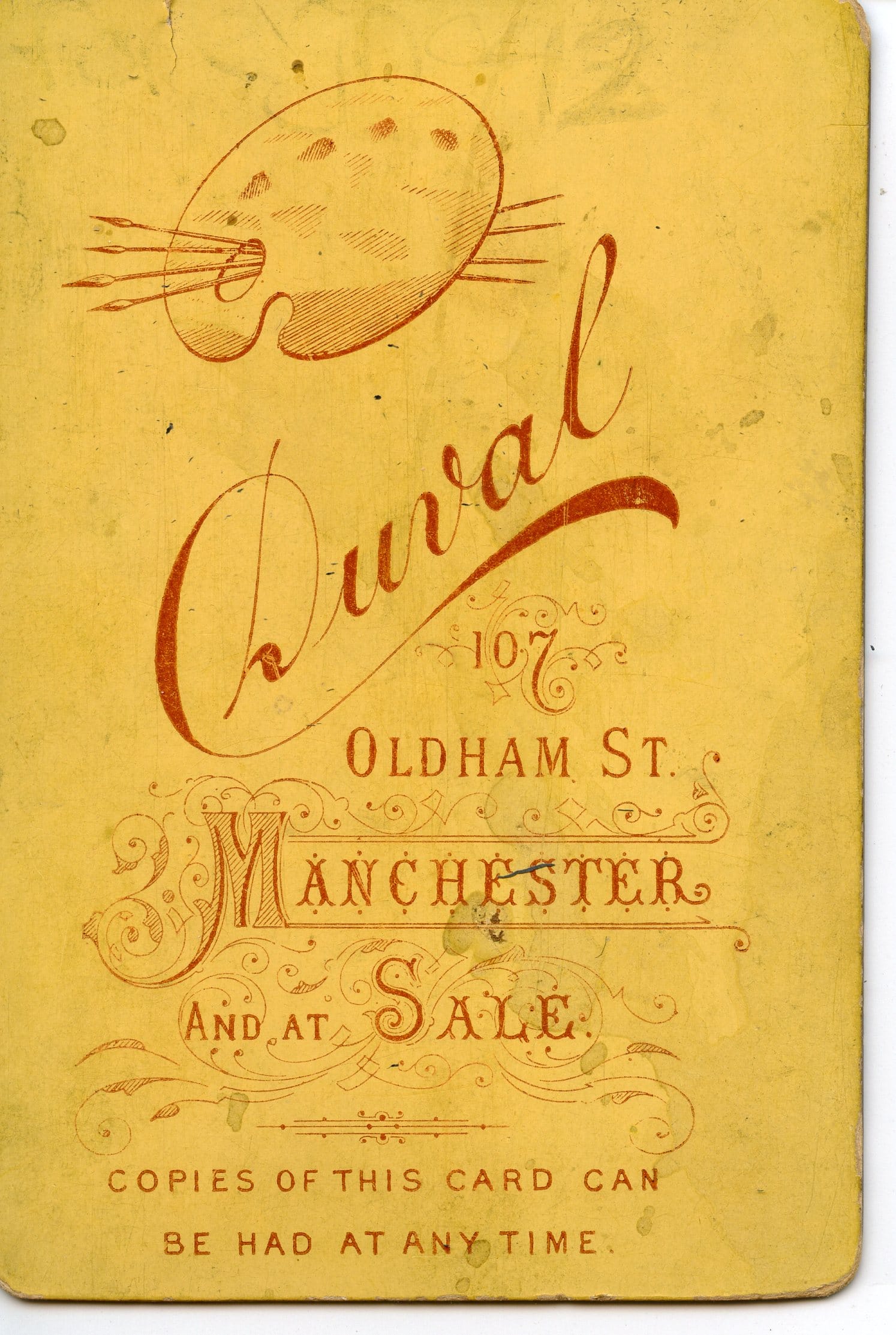
The photographer’s name is “Duval, 107 Oldham St., Manchester And at Sale.” A Google search for “Duval 107 Oldham St.” turned up a website that presents the life and work of his father, Charles Allen Du Val, a painter. Photographer Charles Du Val (born 1835) used Duval as his surname on his photographs. The author of the website included pictures of the backs of the pictures to show how the design evolved over time. The author of the site on the Du Val’s footnoted all their work, making verifying their sources even simpler.
According to the site, the card I have is a type F because it lists both the studio on Oldham St. and the one at Sale, Cheshire.
Duval had a studio at 107 Oldham St. by 1886 and opened the one at Sale in 1887. By comparing my card to the ones online it looked like something was missing. The bottom edge of the card had been trimmed. The handwritten number that Duval put on the back of all of his photographs was cut off as well as the studio name on the bottom edge of the front.
The photographer’s information suggests a date for this photo of circa 1887.
The author of the site included a contact link so the next step is to write to him to see if he knows what the PICC stands for. Let’s hope he answers.
Dress Details
The woman’s dress is not everyday clothing. She’s dressed for an occasion.
- This could be a mourning photo. She carries a flower upside down and has a dark-colored ribbon around her skirt.
- She could be a musician or a dancer.
At this point, this photo story is a work in progress. I’m missing details about her costume and that pesky watermark.
I’ll keep you posted. In the meantime let me know if you recognize the item in the background or know anything about the transfer mark by leaving a comment. You can also see more of my photo collection by following me on Instagram.